Bluente Achieves Landmark Security Certifications as Enterprises Face Escalating AI Vendor Risk and Data Breach Costs

    Bluente Achieves Landmark Security Certifications as Enterprises Face Escalating AI Vendor Risk and Data Breach Costs

    Summary

    • With the average data breach costing a record USD 4.88 million, enterprises are making cybersecurity a primary factor when selecting AI vendors for sensitive documents.
    • Third-party vendors are now involved in 30% of breaches, making verifiable security certifications like ISO 27001 and SOC 2 critical for any AI tool handling legal or financial data.
    • As an action item, procurement and legal teams should use a due diligence checklist to confirm a vendor's certifications, data governance policies, and that their data will not be used for AI model training.
    • To meet these enterprise-grade security needs, Bluente's AI Document Translation Platform is now ISO 27001, SOC 2, and GDPR compliant, ensuring your sensitive documents remain protected.

    Newly ISO/IEC 27001:2022, SOC 2, and GDPR certified, Bluente sets new standard for secure AI translation in legal, financial, and regulated industries

    In a world where the global average cost of a data breach has reached USD 4.88 million—a significant 10% year-over-year increase—enterprises are scrutinizing their AI vendors with unprecedented rigor, especially those handling sensitive legal, financial, and corporate documents.

    Today, Bluente, a leader in AI-powered document translation for legal and financial professionals, announces it has achieved ISO/IEC 27001:2022 certification, SOC 2 compliance, and GDPR compliance—establishing a new benchmark for trust and security in the AI translation industry.

    This milestone addresses a critical market need: While AI adoption is accelerating—with 88% of organizations using AI in at least one business function according to McKinsey's 2026 Global Survey—a significant trust gap persists. Only 17% of organizations have fully implemented AI governance frameworks, even as procurement leaders are increasingly mandated to treat cybersecurity risk as a primary factor in vendor selection, with Gartner predicting 60% of organizations will do so by 2026.

    The Enterprise Buying Reality in 2026: A Market Defined by Risk, Regulation, and Scrutiny

    The Escalating Financial & Operational Cost of Data Breaches

    Data breach costs aren't just a line item; they represent significant financial and reputational damage, making security controls a board-level concern for enterprises selecting AI vendors for sensitive document processing.

    According to IBM's latest research, the global average cost of a data breach reached USD 4.88 million in 2024, a 10% year-over-year increase—the largest jump since the pandemic. This rising cost trajectory shows no sign of slowing, making risk mitigation a top priority.

    The lifecycle of breaches is particularly concerning. Credential-based attacks—those using stolen or compromised credentials—take an average of 292 days to identify and contain. Phishing and social engineering attacks aren't far behind at 261 days and 257 days, respectively. This extended "dwell time" means that vulnerabilities in third-party systems can persist undetected for the better part of a year.

    The nature of compromised data significantly impacts breach costs and regulatory exposure. IBM found that 46% of breaches involved customer personal data (PII), and 35% involved "shadow data"—information stored in unsanctioned locations or formats—which correlated to a 16% greater cost of breach. This finding is highly relevant for AI tools that might create or store copies of sensitive documents during processing.

    On the positive side, organizations with extensive use of security AI and automation saw USD 2.2 million lower breach costs on average—demonstrating the value of systematic, technology-enabled security frameworks.

    The Supply Chain as the New Frontline: Third-Party Risk Becomes a Primary Determinant

    Attackers are increasingly targeting the supply chain, making third-party vendor security not just an IT issue, but a core business continuity risk that's reshaping procurement priorities.

    Third-party involvement in data breaches has doubled to 30%, according to Verizon's 2026 Data Breach Investigations Report (DBIR). This alarming trend reflects attackers' strategic shift toward exploiting the weakest links in interconnected business ecosystems.

    Business disruptions from third parties have become commonplace. Gartner reports that 45% of organizations experienced a third-party-related business interruption in the past two years. The Prevalent 2024 Third-Party Risk Management Study further reveals that 61% of companies experienced a data breach or security incident originating from a third party in the past year.

    In response to these trends, procurement is evolving into a security gatekeeper role. Gartner predicts that by 2026, 60% of organizations will use cybersecurity risk as a primary determinant in third-party transactions and business engagements. Despite this shift, monitoring capabilities lag behind the risk. Only 23% of security leaders are monitoring third parties in real-time for cybersecurity exposure, highlighting the need for vendors to provide "portable evidence" of their security posture, such as formal certifications.

    The Unforgiving Regulatory Landscape: Navigating a Complex Web of Compliance

    Regulatory pressure is intensifying globally, with steep fines and complex operational requirements that flow down to vendors. Enterprises must ensure their AI partners can meet these stringent obligations, particularly when handling regulated data or cross-border transfers.

    GDPR enforcement remains robust, with aggregate fines issued across Europe in 2024 totaling EUR 1.2 billion, according to the DLA Piper GDPR Fines and Data Breach Survey. Over 2,086 fines were recorded by March 2024. The maximum fine framework remains severe at up to €20 million or 4% of annual worldwide turnover—a substantial risk exposure for enterprises whose vendors mishandle personal data.

    New regulations are expanding obligations across sectors. The EU's Digital Operational Resilience Act (DORA), which entered into application on January 17, 2025, places strict requirements on ICT third-party providers in the financial sector. Similarly, the NIS2 Directive, applied from October 18, 2024, broadens cybersecurity obligations for critical sectors across the EU.

    Disclosure pressure is also increasing. In the US, SEC rules adopted on July 26, 2023 now require public companies to disclose material cybersecurity incidents on Form 8-K Item 1.05, increasing transparency and accountability for vendor-related incidents.

    The AI Adoption Paradox: High Demand Meets a Persistent Trust Deficit

    While C-suite executives are pushing for AI adoption to gain competitive advantages, employees and risk leaders remain wary due to a lack of trust and mature governance frameworks, creating significant headwinds for AI implementation in sensitive use cases.

    AI use is becoming widespread across industries. McKinsey's 2026 Global Survey on AI reveals that 88% of organizations are using AI in at least one business function, and roughly one-third are scaling AI programs across multiple business areas.

    However, trust remains a major barrier to broader adoption. A global survey reported by Reuters found that 58% of people perceive AI as untrustworthy—a concerning statistic for vendors seeking to process sensitive documents like contracts, legal briefs, or financial statements.

    AI governance maturity is still in early stages for most organizations. A survey cited by ITPro highlights that only 17% of organizations have fully implemented AI governance frameworks, leaving significant gaps in risk management for AI deployments.

    To bridge this gap between adoption pressure and governance maturity, industry frameworks are emerging. NIST released its Generative AI Profile (NIST-AI-600-1) on July 26, 2024, to help organizations manage generative AI risks, signaling a move toward standardized controls that third-party vendors will increasingly need to demonstrate compliance with.

    Handling sensitive documents? Bluente's certified security ensures your confidential translations remain protected with enterprise-grade encryption and compliance. Translate Now.

    Bluente's Commitment to Enterprise-Grade Security and Compliance

    Announcement: Bluente Achieves ISO/IEC 27001:2022, SOC 2, and GDPR Compliance

    Bluente proudly announces the successful completion of audits and assessments confirming its adherence to three globally recognized standards for security and privacy—ISO/IEC 27001:2022, SOC 2, and GDPR compliance.

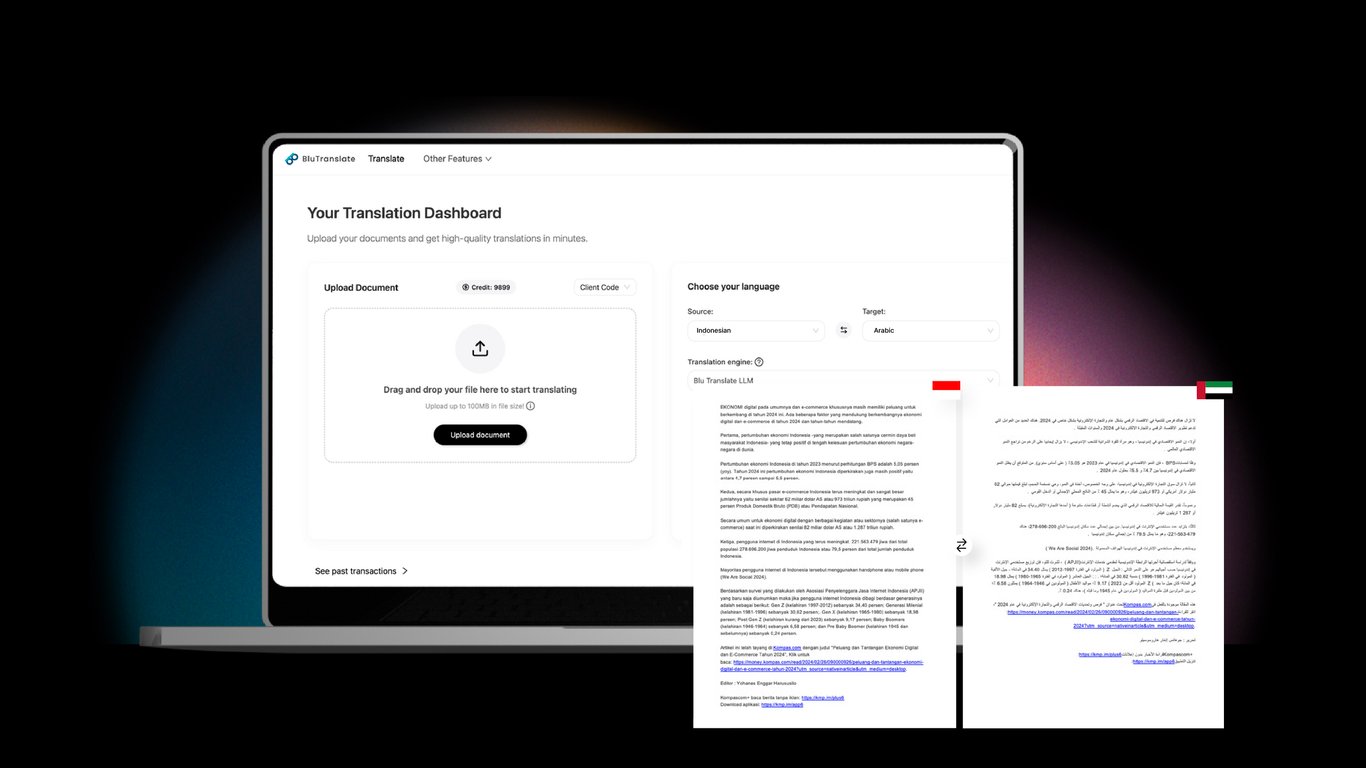
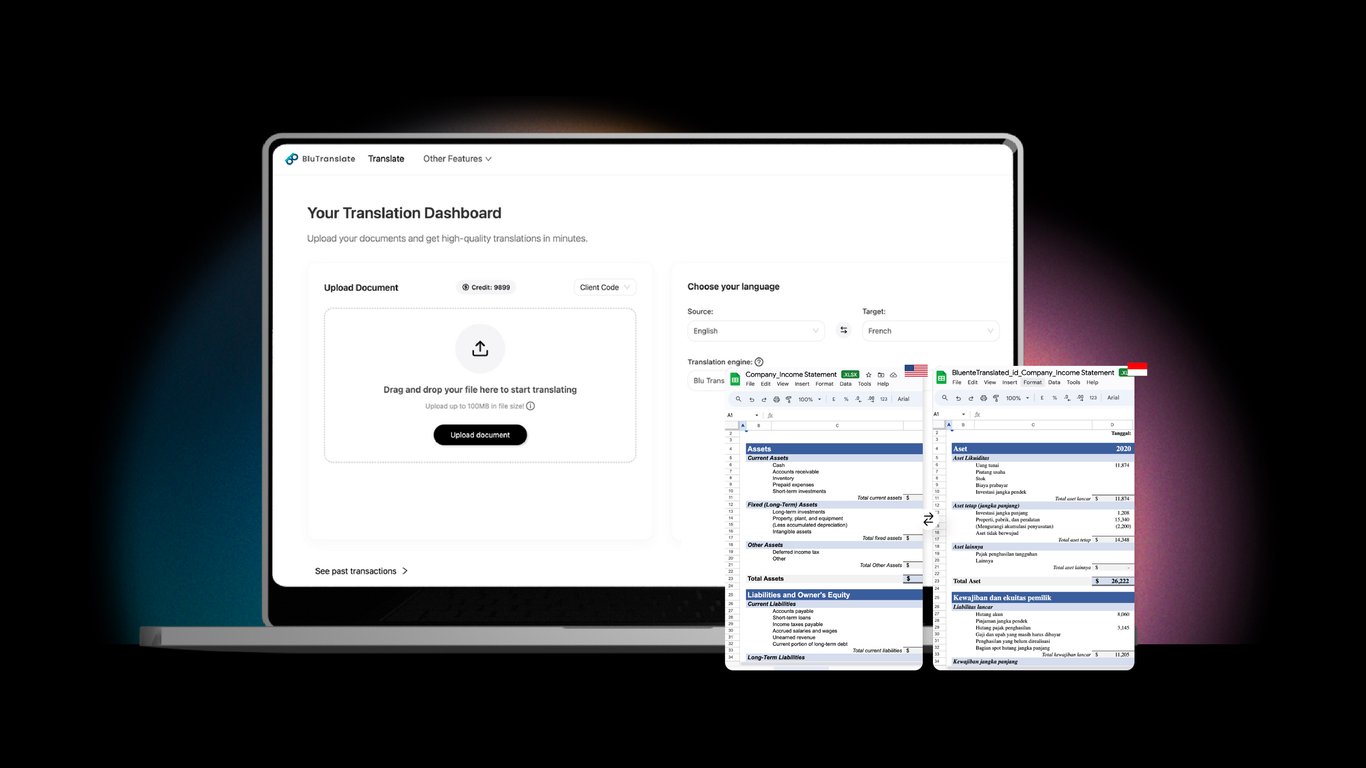
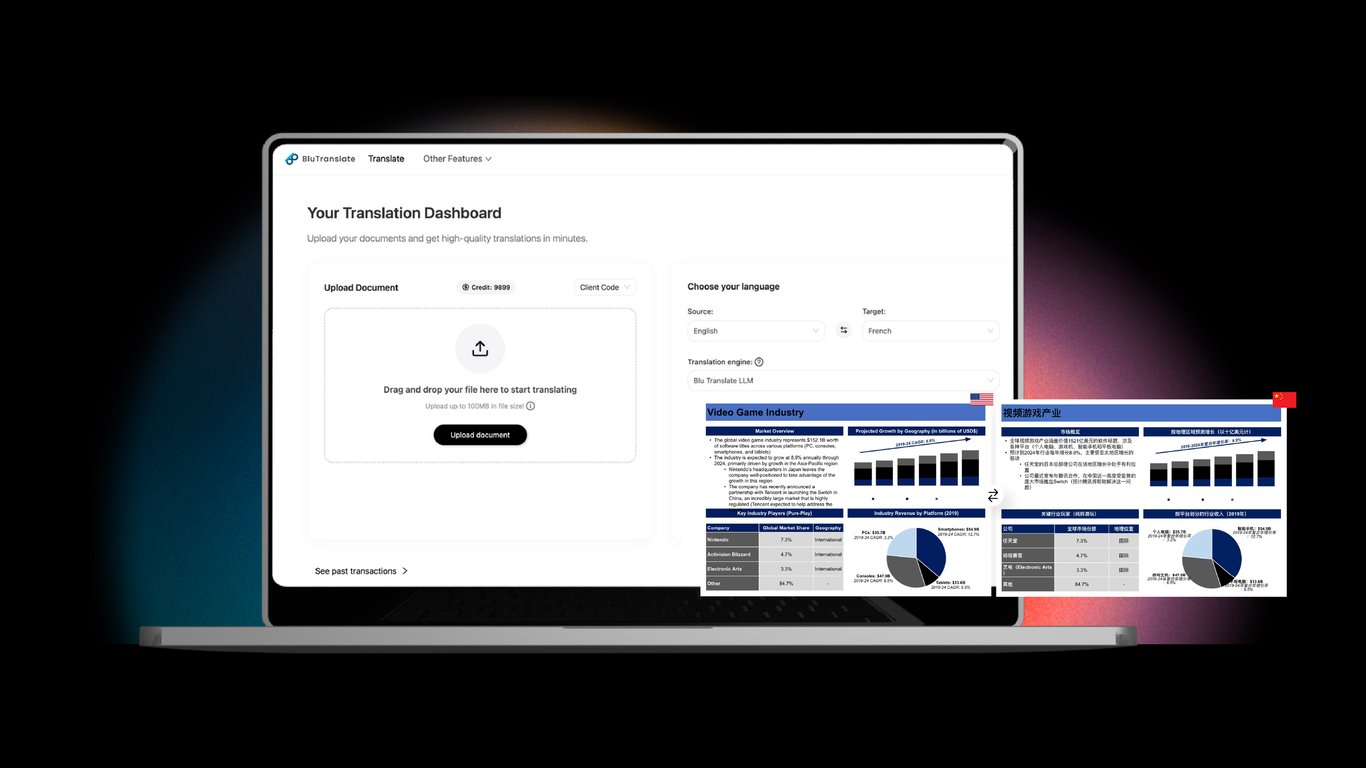
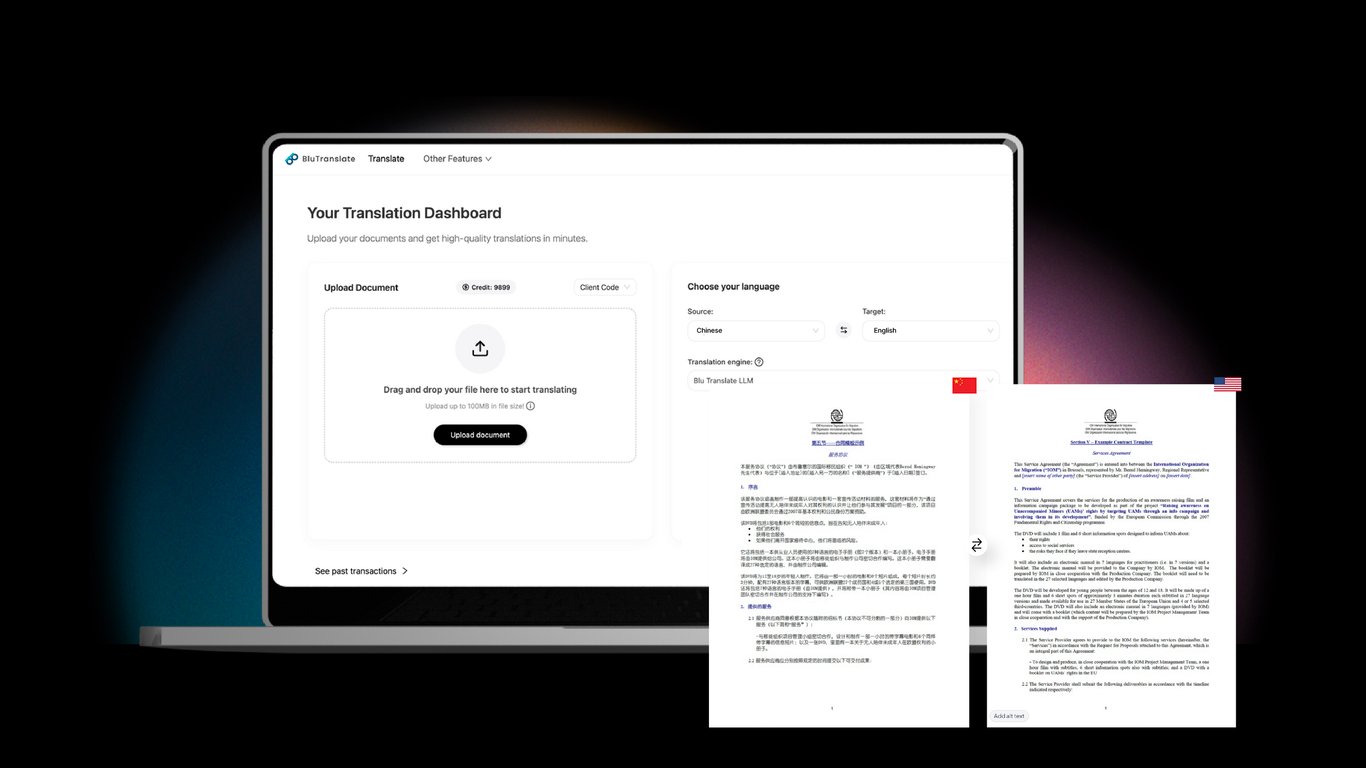
    This achievement reinforces Bluente's position as the trusted AI translation partner for professionals in the legal, financial, and business sectors. The company's AI Document Translation Platform is designed from the ground up to handle sensitive documents with up to 95% accuracy across 120+ languages, while preserving original formatting perfectly. Key capabilities include:

    • Enterprise-Grade Security: End-to-end encryption and automatic file deletion to ensure confidentiality.
    • Industry-Specific Accuracy: A proprietary AI engine fine-tuned for complex legal and financial terminology.
    • Purpose-Built Legal Workflows: Specialized features like bilingual court-ready formatting and support for certified translations for official submissions.

    "In today's high-risk environment, we recognize that our customers in legal, financial, and regulated industries aren't just looking for AI translation capabilities—they need verifiable assurance that their sensitive documents are being handled with enterprise-grade security and privacy controls," said [EXECUTIVE NAME], [TITLE] at Bluente. "These certifications represent our unwavering commitment to providing both cutting-edge AI translation and the highest standards of data protection."

    Decoding the Certifications: What This Means for Enterprise Buyers

    ISO/IEC 27001:2022: The Gold Standard for an Information Security Management System (ISMS)

    For enterprise buyers, ISO/IEC 27001:2022 certification provides evidence of a formal, systematic approach to managing information security risks, not just ad-hoc policies. It demonstrates Bluente's commitment to continuous improvement in information security practices.

    The ISO standard is recognized globally as the premier framework for information security management. According to ISO, conforming organizations have established a system to "manage information security risks and follow best practices." This certification covers key controls around asset management, access control, cryptography, supplier relationship security, incident response management, and regular audits.

    SOC 2: Verifiable Assurance of Key Trust Service Criteria

    A SOC 2 report is a familiar, auditor-backed artifact that significantly streamlines procurement and security due diligence processes. It maps directly to common questions in vendor security questionnaires, accelerating the onboarding process for enterprise clients.

    The report provides an independent auditor's opinion on controls relevant to the AICPA's Trust Services Criteria: Security, Availability, Processing Integrity, Confidentiality, and Privacy. For organizations handling sensitive documents, these assurances provide concrete evidence of security commitments.

    GDPR Compliance: A Commitment to Data Privacy and Lawful Processing

    GDPR compliance demonstrates that Bluente's processes are designed to support clients' GDPR obligations, lowering risk for enterprises that process the personal data of EU residents. With GDPR fines reaching up to €20 million or 4% of annual global turnover, this compliance status provides significant risk mitigation.

    Bluente's GDPR compliance provides assurance regarding lawful basis for processing, data subject rights, data protection by design and default, robust Data Processing Addendums (DPAs), management of subprocessors, and protocols for handling cross-border data transfers and data retention/deletion.

    Implications for Enterprise Leadership: Accelerating Due Diligence and Reducing Risk

    For the CISO and Security Teams:

    Bluente's ISO 27001 certification and SOC 2 report provide a comprehensive, third-party validated view of its security posture, saving hundreds of hours in manual questionnaire exchanges and audits. This reduces onboarding friction significantly, particularly for organizations with limited vendor risk management resources.

    The certifications address key control areas that security teams typically scrutinize during vendor assessments, including access management, encryption, incident response, and vulnerability management. By proactively obtaining these certifications, Bluente provides security teams with confidence that industry-standard controls are in place.

    For the General Counsel and Legal Operations:

    Bluente's GDPR compliance and robust data processing agreements ensure that legal teams can confidently use the platform for documents containing personally identifiable information (PII) or those subject to cross-border transfer scrutiny, such as those related to the EU-US Data Privacy Framework.

    Legal-specific workflows (e.g., court-ready formatting, tracked changes) are backed by an enterprise-grade security framework, ensuring that sensitive litigation documents, contracts, and regulatory filings maintain both their confidentiality and integrity throughout the translation process.

    For the CPO and Procurement/Vendor Management Teams:

    As 60% of organizations make cybersecurity a primary determinant in vendor selection by 2026, Bluente's certifications serve as pre-vetted qualifications, accelerating the procurement lifecycle and satisfying internal governance requirements.

    Procurement teams can leverage these certifications to streamline vendor risk assessments, reduce the back-and-forth of security questionnaires, and satisfy stakeholder concerns about third-party risk—particularly important as third-party involvement in breaches has doubled to 30%.

    Due Diligence Checklist for Selecting an AI Translation Vendor

    To help enterprises navigate the complex landscape of AI vendors for sensitive document processing, Bluente recommends asking the following critical questions during the due diligence process:

    1. Certification & Attestation:

    • Can you provide a current ISO/IEC 27001:2022 certificate and the full scope statement?
    • Can you provide a SOC 2 Type II report? What was the audit period, and were there any exceptions noted?
    • What other compliance frameworks do you adhere to (GDPR, HIPAA, CCPA, etc.)?

    2. Data Governance & Privacy:

    • What is your data retention policy? Do you offer automatic file deletion, and is it configurable?
    • Where is customer data processed and stored (data residency)? What mechanisms are used for legal cross-border data transfers?
    • Can you provide a list of all subprocessors that will handle our data?
    • How do you ensure data segregation between clients?

    3. Security Controls:

    • Is all data encrypted both in transit (TLS 1.2+) and at rest (AES-256)?
    • What are your access control policies? How are access logs monitored for suspicious activity?
    • What are your formal incident response SLAs?
    • How frequently do you conduct penetration testing and vulnerability assessments?

    4. AI Model & Training Data:

    • Is customer data ever used to train your AI models? (Bluente's answer is a clear "no")
    • Do you offer human-in-the-loop review options, and what are the security controls for human reviewers?
    • What steps do you take to mitigate AI hallucinations or mistranslations of critical terms?
    • How do you maintain and update domain-specific terminology (legal, financial, etc.)?

    Need secure enterprise translation? Bluente offers ISO/IEC 27001:2022, SOC 2, and GDPR-compliant translation solutions for your organization's most sensitive documents. Book a Demo.

    The Future of Enterprise Translation is Secure, Compliant, and Trustworthy

    The convergence of rising data breach costs (USD 4.88 million average), escalating third-party risk (30% of breaches involve a third party), and tightening regulations (DORA, NIS2) has created an urgent need for verifiably secure AI solutions—particularly for sensitive document processing.

    Bluente's achievement of ISO 27001, SOC 2, and GDPR compliance is a direct response to this market demand. The company provides not only cutting-edge AI translation technology but also the enterprise-grade assurance that legal, finance, and security leaders require when processing contracts, financial statements, regulatory filings, and other high-value documents.

    "As the regulatory landscape continues to evolve and third-party risk scrutiny intensifies, we're committed to maintaining the highest standards of security and compliance," said [EXECUTIVE NAME]. "These certifications are not just badges—they represent our ongoing investment in the processes, technologies, and expertise needed to be a trusted partner for organizations handling sensitive information in a complex global environment."

    By combining advanced AI capabilities with robust security and compliance frameworks, Bluente is setting a new standard for trust in the AI translation industry—providing organizations with the confidence they need to leverage AI for multilingual document processing without compromising on security or compliance.

    To learn more about Bluente's security posture or to request a copy of our compliance documentation, visit bluente.com/security or contact our enterprise team.

    Frequently Asked Questions

    What security certifications does Bluente hold?

    Bluente holds ISO/IEC 27001:2022 certification, SOC 2 compliance, and is GDPR compliant. These globally recognized standards validate our commitment to maintaining a robust Information Security Management System (ISMS), ensuring operational controls meet key trust criteria, and adhering to strict data privacy principles for handling sensitive client information.

    Why are ISO 27001 and SOC 2 important for an AI translation vendor?

    ISO 27001 and SOC 2 are crucial because they provide independent, third-party verification of a vendor's security posture. For enterprises translating sensitive legal or financial documents, these certifications offer assurance that the AI vendor has implemented systematic controls to manage risks, prevent data breaches, and protect confidential information, thereby streamlining security due diligence and reducing third-party risk.

    How does Bluente ensure the confidentiality of my documents?

    Bluente ensures document confidentiality through multiple layers of enterprise-grade security. All data is protected with end-to-end encryption, both in transit (TLS 1.2+) and at rest (AES-256). We enforce strict access controls, offer automatic file deletion policies, and most importantly, we never use customer data to train our AI models, ensuring your information remains private.

    Will Bluente use my documents to train its AI models?

    No, Bluente will never use your documents or data to train its AI models. Our business model is built on providing secure, private translation services. All client data is treated as confidential, processed only for the purpose of translation, and is never incorporated into our training datasets. This is a core tenet of our commitment to data privacy and security.

    What types of documents is Bluente best suited for?

    Bluente is specifically designed for professionals in legal, financial, and regulated industries who handle high-stakes, sensitive documents. This includes legal contracts, eDiscovery materials, M&A due diligence files, financial statements, compliance reports, and patent filings. Our AI is fine-tuned for complex industry terminology and preserves original document formatting.

    How does Bluente differ from general-purpose AI translators?

    Bluente differs from general-purpose translators in three critical ways for enterprises:

    1. Verifiable Security: We provide enterprise-grade security validated by ISO 27001 and SOC 2 certifications.
    2. Industry-Specific Accuracy: Our AI is fine-tuned for legal and financial terminology, delivering higher accuracy than generic models.
    3. Professional Workflows: We offer features like perfect format preservation and bilingual court-ready document generation that are essential for professional use.

    Where is customer data processed and stored?

    Bluente provides clear information on data residency to meet global compliance requirements like GDPR. Customer data is processed and stored in secure, certified data centers with robust physical and logical security controls. For specific data residency needs, please contact our enterprise team to discuss available options.

    How can I get a copy of Bluente's ISO certificate or SOC 2 report?

    You can request copies of our ISO/IEC 27001:2022 certificate and SOC 2 report as part of your organization's due diligence process. These documents are typically shared with prospective and current clients under a non-disclosure agreement (NDA). Please contact our sales team or visit our security page to initiate the request.

    About Bluente

    Bluente is an AI-powered document translation platform designed for professionals in the legal, financial, and corporate sectors who are bottlenecked by slow, expensive, and insecure traditional translation methods. The platform is engineered to solve the critical need for processing high volumes of sensitive, foreign-language documents—from M&A due diligence files to eDiscovery evidence—under tight deadlines.

    Bluente’s proprietary AI delivers up to 95% accuracy for complex industry-specific content and perfectly preserves the original document's formatting across file types like PDF, Word, and Excel. The platform offers a suite of services, including an AI Document Translation Platform, Specialized Legal Translation with features like bilingual document generation, and Certified Document Translation for official submissions. With enterprise-grade security at its core, Bluente empowers teams to operate efficiently on a global scale, mitigate risk, and gain a competitive advantage.

    Sources

    1. IBM Security, "Cost of a Data Breach Report 2024," https://www.ibm.com/security/data-breach
    2. Verizon, "Data Breach Investigations Report (DBIR) 2026," https://www.verizon.com/business/resources/reports/dbir/
    3. Gartner, "Gartner Unveils Top Eight Cybersecurity Predictions for 2022-2023," June 21, 2022, https://www.gartner.com/en/newsroom/press-releases/2022-06-21-gartner-unveils-the-top-eight-cybersecurity-predictio
    4. DLA Piper, "GDPR Fines and Data Breach Survey: January 2025," https://www.dlapiper.com/en/insights/publications/2025/01/dla-piper-gdpr-fines-and-data-breach-survey-january-2025
    5. Prevalent, "2024 Third-Party Risk Management Study," https://www.businesswire.com/news/home/20240508397249/en/Third-Party-Data-Breaches-Rose-49-in-2023-Reaching-Record-Level-New-Prevalent-Study-Finds
    6. SEC, "Cybersecurity Risk Management, Strategy, Governance, and Incident Disclosure," July 26, 2023, https://www.sec.gov/rules/final/2023/33-11205.pdf
    7. NIST, "NIST Releases Generative AI Profile," July 26, 2024, https://www.nist.gov/itl/ai-risk-management-framework
    8. European Commission, "Digital Operational Resilience Act (DORA)," https://www.eiopa.europa.eu/digital-operational-resilience-act-dora_en
    9. European Commission, "NIS2 Directive," https://digital-strategy.ec.europa.eu/en/library/nis2-commission-implementing-regulation-critical-entities-and-networks
    10. AICPA, "Trust Services Criteria," https://www.aicpa-cima.com/topic/audit-assurance/audit-and-assurance-greater-than-soc-2
    11. ISO, "ISO/IEC 27001 Information Security Management," https://www.iso.org/standard/27001
    12. Reuters, "Global survey shows deep distrust of AI," July 11, 2023, https://www.reuters.com/business/emerging-economies-lead-way-ai-trust-survey-shows-2025-04-28/
    13. McKinsey & Company, "The State of AI: Global Survey 2026," https://www.mckinsey.com/capabilities/quantumblack/our-insights/the-state-of-ai
    Published by
    Back to Blog
    Share this post: TwitterLinkedIn